


How to Care for a Partial Denture Daily
A partial denture is cared for by cleaning it as your dentist instructed, handling it gently, storing it safely when it is out, and brushing the natural teeth around it. If it feels different, becomes uncomfortable, or no longer fits as expected, stop and call your dentist rather than adjusting it yourself.
How should you clean a partial denture each day?
Follow the cleaning routine your dentist or dental team recommended for your specific partial denture. Different appliances and materials may have different care instructions, so personalized guidance is always the best starting point.
In general, daily care should be gentle and consistent:
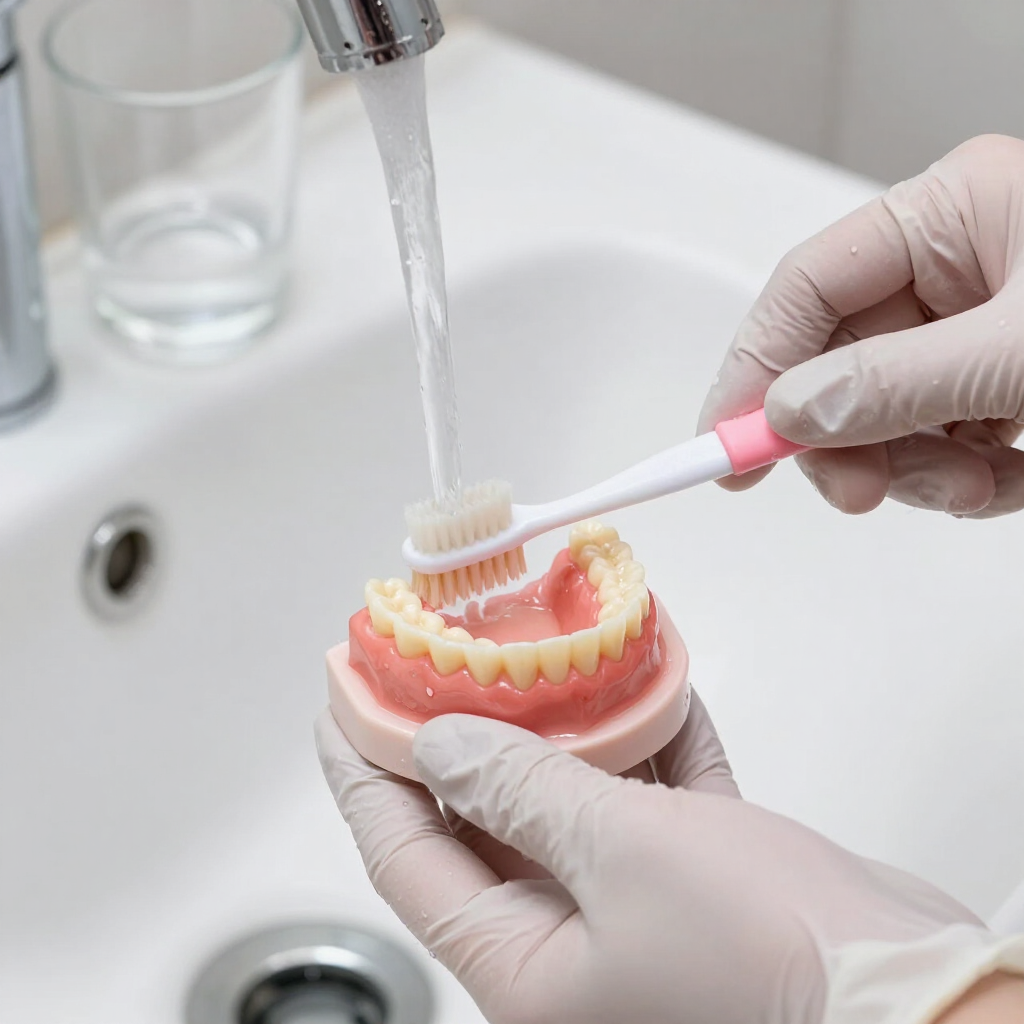
- Handle the partial denture over a folded towel or a sink partly filled with water. This can help reduce the chance of damage if it slips.
- Remove it as directed by your dentist and rinse away loose debris.
- Clean it using the method and products your dental team recommended.
- Rinse it thoroughly before putting it back in your mouth.
- Keep your cleaning supplies together so the routine is easy to follow.
Avoid using very hot water unless your dentist specifically tells you it is appropriate. Heat may affect the shape of some dental appliances. Do not use abrasive household cleaners, and do not scrub aggressively. If you are unsure what is safe for your partial denture, ask your dentist before trying a new product.
Cleaning is not only about appearance. Food debris and buildup can irritate the tissues under the appliance and may affect the natural teeth that support it. A steady routine is usually easier and more comfortable than waiting until the partial denture looks heavily coated.
When should you remove a partial denture?
Your dentist will tell you when to wear and remove your partial denture. Many people remove their appliance for cleaning and may be instructed to leave it out at certain times, including while sleeping. However, recommendations can vary, so follow the directions given during your appointment.
Never force a partial denture in or out. If it does not move easily, pause and contact your dental office for guidance. Trying to force it may cause discomfort or damage the appliance or your mouth.
When removing it, use both hands if that is how your dentist taught you. Avoid pulling on one area or using sharp objects. Set it down carefully rather than placing it near an edge where it could fall.
Protecting your natural teeth
A partial denture often rests against or attaches around natural teeth. Those teeth need careful daily cleaning because they help support your smile and may be especially important to the fit of the appliance.
Continue your normal oral hygiene routine as directed by your dentist. Pay attention to the gumline, the spaces between teeth, and the areas where the partial denture touches or rests. Ask your dental team whether a particular brush, flossing method, or other cleaning aid would be helpful for you.
Regular professional care also matters. Routine checkups and dental cleanings allow your dentist and hygienist to monitor your natural teeth, gums, and partial denture. If you have difficulty cleaning around the appliance, mention it at your visit rather than trying to solve the problem with force or sharp tools.
How should you store a partial denture safely?
Store the appliance exactly as your dentist instructed. When it is not in your mouth, place it somewhere clean and secure, away from pets, children, and areas where it could be knocked onto the floor.
Use the storage method recommended by your dental team. Some partial dentures may need to remain moist, while others may have specific storage requirements. Do not assume that one method is right for every appliance. If you have misplaced the storage container or are unsure what to use, call your dentist for advice.
Keep these habits in mind:
- Rinse or clean the appliance as instructed before storing it.
- Use a clearly marked container with a secure lid.
- Keep the container away from hot water and direct heat.
- Store it in the same place each day so it is less likely to be lost.
- Bring it with you if your dental team asks to examine it.
Do not wrap a partial denture in a tissue or napkin. It can be thrown away by mistake, especially in a busy household or restaurant. A dedicated container is safer and easier to recognize.
What should you do if your partial denture feels different?
Call your dentist if the partial denture feels loose, tight, painful, sharp, or different from usual. Also call if it rocks when you speak or chew, causes repeated sore spots, or becomes difficult to insert or remove.
A change in fit may have several possible causes, including changes in the appliance, your teeth, or the tissues in your mouth. Only a dental professional can evaluate what is happening and explain the safest next step.
Do not adjust, bend, file, repair, or glue the partial denture at home. Home changes can damage the appliance or make it harder for your dentist to correct the problem. Do not continue wearing it if it is causing significant pain unless your dental team specifically tells you to do so.
If the appliance breaks, keep all pieces and contact your dentist. Avoid trying to put broken parts back together. If you notice swelling, bleeding that does not settle, or severe discomfort, call your dental office promptly for instructions.
A comfortable daily routine
A simple routine can make partial denture care easier:
- Remove and handle the appliance as instructed.
- Clean it gently using your dentist’s recommended method.
- Clean your natural teeth and gums carefully.
- Store the appliance safely when it is out.
- Contact your dental office if its fit, comfort, or function changes.
Frequently asked questions
Can I use hot water to clean a partial denture?
Use only the cleaning method your dentist recommended. Unless your dental team specifically approves it, avoid hot water because heat may affect some appliances.
Can I fix a partial denture at home?
No. Do not adjust, repair, file, bend, or glue it at home. Call your dentist if it breaks or no longer fits comfortably.
Should I sleep in my partial denture?
Follow your dentist’s instructions. Wear and removal recommendations can differ, so ask your dental team if you are uncertain.
How often should I have a partial denture checked?
Keep the routine appointments recommended by your dentist. Your mouth and appliance can change over time, and regular visits help your dental team monitor both.
Key takeaways
Caring for a partial denture means following your dentist’s cleaning and storage instructions, protecting the natural teeth around it, and handling the appliance gently. Keep it in a safe container when it is out, and avoid home repairs or adjustments. If it feels different, causes soreness, or becomes harder to insert or remove, call your dental office before continuing to use it. These habits support a comfortable daily routine and help your dental team address changes early. For general information only, not dental advice. Call 615-824-7220 with questions.